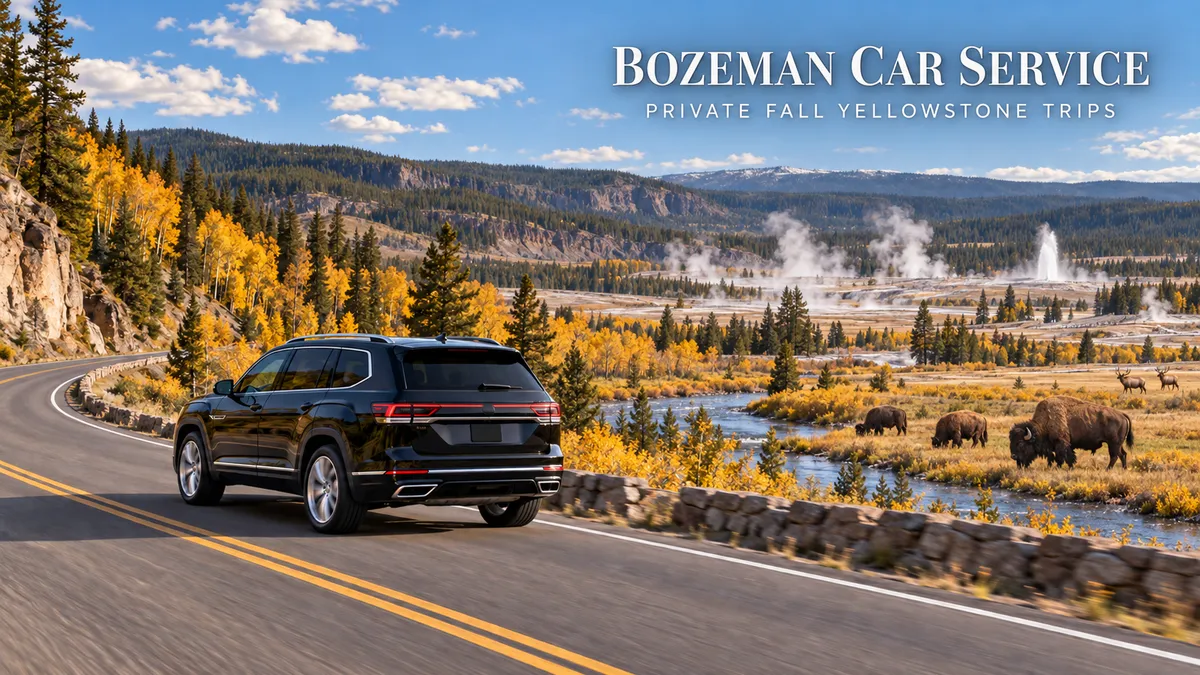
Yellowstone National Park Fall Tours & Private Trips
Why Fall Is a Fantastic Time to Visit Yellowstone National Park
Summer may receive most of the attention, but fall reveals a different side of Yellowstone National Park.
The air becomes cooler. Meadows and river corridors turn shades of gold. Morning frost returns to the landscape, steam becomes more dramatic above thermal features, and the sound of bugling elk carries through parts of the park.
The busiest summer crowds also begin to diminish.
For visitors who appreciate wildlife, photography, changing scenery and a quieter atmosphere, September and October can be among the most rewarding times of the year to experience Yellowstone.
Bozeman Car Service is accepting reservations for private fall Yellowstone trips from Bozeman, Big Sky, Livingston, Paradise Valley, Gardiner, West Yellowstone and other approved pickup locations.
Yellowstone Feels Different After Summer
Yellowstone does not simply become a less crowded version of its summer self. The character of the park changes as the season progresses.
Days become shorter. Temperatures fall quickly after sunset. Frost may cover the grass during the morning, while early snow can appear on surrounding mountains—or occasionally reach the roads and valleys.
Summer’s bright green landscape gradually changes to muted gold, amber and rust. Cottonwoods, aspens, willows and grasses contribute fall color along rivers, valleys and forest edges.
The effect is not necessarily the continuous blanket of red and orange associated with New England. Yellowstone’s fall beauty is more varied and distinctly western: golden meadows, pale grasses, dark evergreen forests, winding rivers and mountains that may receive their first dusting of snow.
It is a landscape that can look completely different from one morning to the next.
Fewer Crowds and a Calmer Pace
Yellowstone remains popular during fall, particularly around famous thermal areas and wildlife-viewing locations. Visitors should not expect to have the park entirely to themselves.
However, visitation generally begins declining after the busiest summer period.
Parking can still be limited, wildlife sightings can still create traffic, and popular boardwalks may remain busy. Nevertheless, many travelers find that September and October provide a calmer experience than July and August.
The difference can be felt in small but important ways:
Less pressure to rush through every stop
More opportunities to appreciate the landscape quietly
Fewer large tour groups at certain locations
A more relaxed atmosphere during short walks
Better opportunities to hear natural sounds
More flexibility at some scenic pullouts
Fall does not eliminate traffic or parking challenges, but it can make Yellowstone feel less hurried.
Yellowstone’s Fall Colors
Yellowstone’s fall color is often subtle, widespread and beautifully integrated into the larger landscape.
Aspens can turn brilliant shades of yellow. Cottonwoods brighten river corridors. Willows change along streams and wetlands, while open meadows fade from summer green into gold and tawny brown.
Some of the most beautiful scenes are not necessarily the park’s most famous attractions.
A quiet river bend framed by yellow cottonwoods, an elk crossing a golden meadow, steam rising behind frost-covered grass or early snow above an autumn valley can become the defining memory of a fall Yellowstone trip.
Color timing varies according to elevation, temperature, rainfall, wind and the arrival of freezing weather. No exact peak-color date can be guaranteed.
That unpredictability is part of the season’s character. A flexible itinerary allows the day to follow the most appealing conditions available rather than relying on one predetermined photograph or location.
Cooler Air Makes Thermal Features More Dramatic
Yellowstone’s geysers, hot springs and fumaroles are impressive throughout the year, but cool fall air can make the steam above thermal areas appear especially dramatic.
During a chilly morning, warm vapor may rise heavily across a geyser basin. Sunlight filtering through the steam can create an atmosphere that feels almost otherworldly.
The contrast between cold air and geothermal heat is one of the distinctive pleasures of visiting Yellowstone outside midsummer.
Cooler conditions can also make walking around thermal areas more comfortable than during a hot afternoon. Visitors must still stay on established boardwalks and designated trails at all times.
The ground surrounding thermal features may appear solid while hiding dangerously hot water beneath a thin surface. Review the National Park Service’s Yellowstone safety guidelines before visiting.
Fall Brings the Sound of Bugling Elk
One of Yellowstone’s signature fall experiences is the elk mating season, commonly called the rut.
According to the National Park Service, Yellowstone’s elk rut generally occurs from early September through mid-October. Bull elk bugle to announce their presence, challenge other bulls and gather groups of females.
The sound can carry across open country, particularly during cooler morning and evening hours.
The National Park Service identifies the northern range—including Mammoth Hot Springs—and the Madison River area as notable autumn elk locations. Learn more from the park’s official Yellowstone elk information.
The rut is fascinating to observe, but it also requires additional caution.
Bull elk can be aggressive and unpredictable during mating season. Visitors must remain at least 25 yards away from elk and should never walk between a bull and his group of females.
If an elk moves closer, visitors are responsible for backing away and restoring a safe distance.
Wildlife Activity During the Fall
Fall does not guarantee that visitors will see more animals, but it can produce different and sometimes highly visible wildlife behavior.
Elk are in their mating season. Bears may be actively searching for food before winter. Bison, deer, pronghorn, coyotes, wolves and other animals continue moving through Yellowstone’s enormous landscape.
Cooler conditions can make wildlife observation more comfortable, particularly during the early morning. Shorter daylight and changing seasonal behavior can also affect when and where animals appear.
Every wildlife sighting remains unpredictable.
Animals are not staged for visitors, and even areas known for wildlife can be quiet on a particular day. Patience, careful observation and realistic expectations are essential.
The safest view is often from inside the vehicle or through binoculars. Yellowstone requires visitors to remain at least 100 yards from bears, wolves and cougars and at least 25 yards from bison, elk and all other wildlife.
Never approach an animal for a photograph or stop in the roadway unless directed by park personnel. The National Park Service maintains current Yellowstone conditions and wildlife-safety information.
Fall Light Creates Exceptional Photography
Autumn light can be one of the strongest reasons to visit Yellowstone.
The lower angle of the sun can create depth across valleys and mountains. Cool mornings may bring frost, mist and visible steam. Clouds can move quickly, producing constantly changing light across the landscape.
Fall photography opportunities may include:
Golden meadows and river corridors
Elk during the rut
Bison against autumn grasslands
Steam rising through cold morning air
Early snow on mountain peaks
Reflections along rivers and lakes
Cottonwoods and aspens in changing color
Wildlife moving through open valleys
Good photography does not require approaching wildlife or stepping into restricted areas. Binoculars and telephoto lenses provide safer—and often better—views than attempting to move closer.
Photography stops always depend on legal parking, traffic, road conditions and safe wildlife distances.
Fall Weather Can Change Quickly
A warm, sunny afternoon does not guarantee a warm evening—or even similar conditions one hour later.
Yellowstone sits at high elevation, and fall weather can include sunshine, rain, wind, freezing temperatures and snow. Different parts of the park may experience very different conditions on the same day.
Visitors should consider bringing:
Warm layers
A weather-resistant outer layer
Gloves and a hat
Comfortable walking shoes
Water and snacks
Sunglasses and sunscreen
Binoculars
A camera with extra batteries
Any necessary medication
Cold weather reduces battery life, and mobile-phone coverage remains limited in many parts of Yellowstone.
The National Park Service recommends checking current Yellowstone conditions shortly before traveling.
Yellowstone’s Fall Road Calendar Matters
Fall visitors must pay particular attention to road access.
Although much of Yellowstone remains accessible through October, high-elevation routes may close earlier, and winter weather can cause temporary closures at any time.
For 2026, the National Park Service projects:
Dunraven Pass between Canyon Village and Tower Fall will remain open through October 12, weather permitting.
The Beartooth Highway and Chief Joseph Scenic Byway are projected to remain open through October 12, subject to conditions.
Most major interior park roads are projected to remain open through October 31.
The route from Yellowstone’s North Entrance at Gardiner through Mammoth Hot Springs, Tower Junction and the Northeast Entrance generally remains open to regular vehicles throughout the year, weather permitting.
All projected dates can change because of weather or other circumstances.
Travelers should consult the official Yellowstone road-status map and 2026 closing dates before every fall trip.
A private itinerary should remain flexible enough to adjust when a road, viewpoint or planned destination becomes unavailable.
Some Yellowstone Services Begin Closing in Fall
Fewer crowds come with an important tradeoff: some lodges, restaurants, stores, visitor facilities and other seasonal services begin reducing their hours or closing as fall progresses.
Visitors should not assume that every dining room, store or visitor center available in July will still be operating in late September or October.
Carrying water, snacks and a simple backup meal is a sensible precaution. Fuel should also be planned carefully before entering remote portions of the park.
The National Park Service publishes current information about Yellowstone operating hours and seasonal services.
A Private Fall Yellowstone Experience
Fall rewards flexibility.
Weather can change. Wildlife may appear unexpectedly. One valley may be covered in fog while another is bright and clear. A planned road may temporarily close, while an unplanned viewpoint may provide the most memorable moment of the day.
A private Yellowstone trip with Bozeman Car Service allows the day to be organized around the guests, current conditions and realistic seasonal access.
Depending on the confirmed itinerary, a private fall trip may emphasize:
Seasonal landscapes
Wildlife observation
Fall photography
Thermal areas in cool weather
Short optional walks
A comfortable pace
Scenic meal and rest stops
Flexible timing when conditions change
The purpose is not to race through the park or promise every major attraction in one day. It is to create a comfortable and memorable Yellowstone experience based on the season, the pickup location and the guests’ priorities.
Pickup Is Not Limited to Bozeman
Bozeman is one available starting point, but it is not the only option.
Fall Yellowstone trips may be requested from:
Bozeman
Big Sky
Livingston
Paradise Valley
Gardiner
West Yellowstone
Yellowstone-area lodging
Other approved Montana locations
The best route depends heavily on where the guests are staying. A pickup in Gardiner may favor a different part of the park than a pickup in West Yellowstone or Big Sky.
Guests should provide their complete lodging name and street address when requesting service.
Travelers arriving through BZN can also review private transportation from Bozeman Airport to Yellowstone-area destinations.
Travel in a Premium Private SUV
Fall travel may involve cold mornings, long distances and quickly changing weather.
Bozeman Car Service provides private transportation in a black 2026 Volkswagen Atlas SEL Premium R-Line selected for comfortable Montana travel.
The vehicle is reserved exclusively for the confirmed party. Passenger and cargo capacity depend on the number of travelers and the amount of luggage or equipment.
Guests should disclose coolers, camera cases, hiking equipment, strollers, oversized bags and other large items before booking.
Learn more about the Bozeman Car Service private SUV.
Limited Fall 2026 Yellowstone Availability
Yellowstone’s fall season is beautiful, but the window is limited.
Bozeman Car Service is currently reviewing requests for private Yellowstone trips during the remaining September and October 2026 season, subject to availability, road access, weather and operating requirements.
Trips may be customized around the guests’ pickup location, available time, walking preferences and primary interests.
Wildlife sightings, fall color, weather, road access and individual destinations cannot be guaranteed.
Reserve a Private Fall Yellowstone Trip
If you have been considering Yellowstone, fall may be the perfect time to experience it.
When requesting service, provide:
Your preferred date
Complete pickup address
Number of passengers
Walking and mobility preferences
Available time
Primary interests
Any destinations you especially hope to experience
Luggage or equipment information
Request your private Yellowstone trip online, or call or text Brendan directly at 406-599-9299.
Fewer crowds, golden landscapes, bugling elk, cool mountain air and dramatic thermal steam make fall a Yellowstone season unlike any other.
Bozeman Car Service
Premium Private SUV Transportation & Tours
Call or text: 406-599-9299
