Fall in Montana: Yellowstone, Beartooth, Glacier & Hiking Tours
Fall in Montana: Why September and October Are Perfect for Yellowstone, the Beartooth Highway, Glacier & Private Hiking Trips
There is a short period every year when Montana seems to change almost overnight.
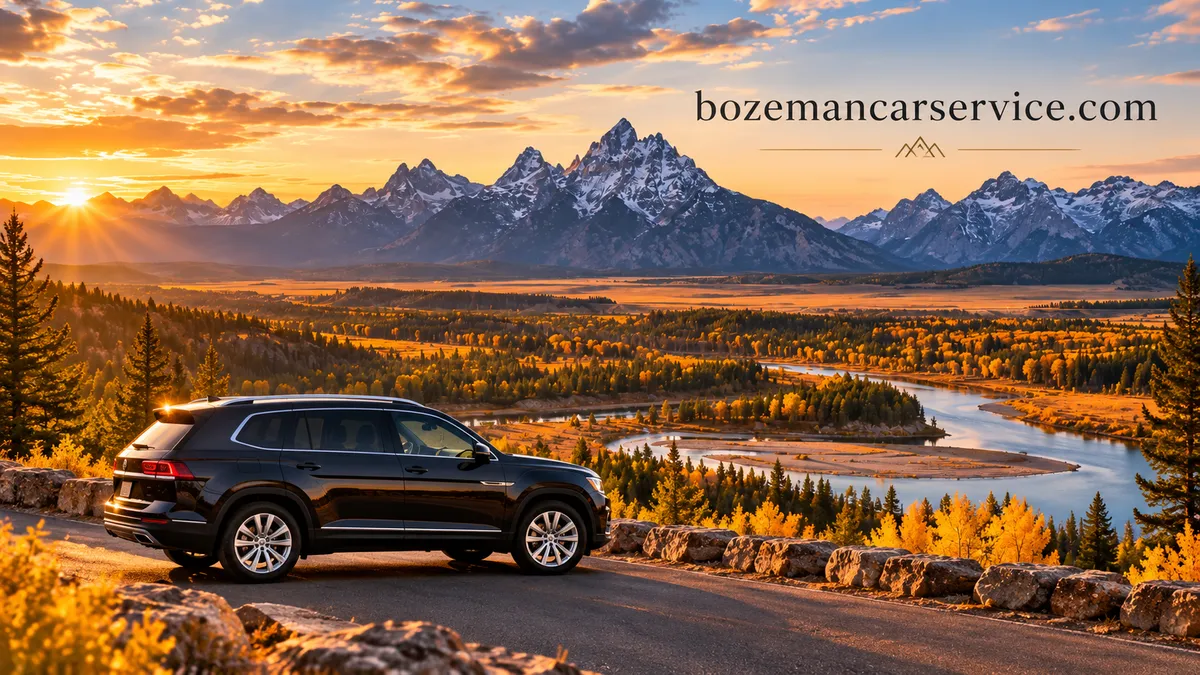
The long days and deep greens of summer begin giving way to gold. Cottonwoods brighten along the rivers. Aspens turn yellow against dark evergreen forests. The mornings become crisp. The mountains may receive their first dusting of snow while the valleys below can still be warm enough for hiking.
September and October are two of the most beautiful — and most interesting — months to explore Southwest Montana.
For visitors staying in Bozeman or Big Sky, this is also an excellent time to get beyond town and experience Yellowstone National Park, the Beartooth Highway, Glacier National Park, Paradise Valley, the mountains around Big Sky, and some of the exceptional hiking areas surrounding Bozeman.
At Bozeman Car Service, fall trips can be built around far more than simply driving from one attraction to another. Private days can combine scenic drives, wildlife viewing, photography, short walks, longer hikes, mountain towns, restaurants, waterfalls, overlooks and other stops depending on the interests and abilities of the guests.
Learn more about Bozeman Car Service private transportation and tours or explore our Private Montana Hiking Trips & Trailhead Transportation.
Montana in Fall Feels Completely Different From Summer
Summer receives most of the attention in Montana, but people who live here know how special the weeks after Labor Day can be.
The sunlight becomes lower and softer. Mountain shadows grow longer. Temperatures become much more comfortable for hiking. Wildlife behavior begins changing. Busy summer destinations gradually become quieter.
And because Montana landscapes contain such dramatic changes in elevation, fall does not happen everywhere at the same time.
Higher elevations can already be experiencing freezing temperatures or snow while lower valleys remain sunny and relatively mild. Colors can move gradually down the mountainsides. A drive covering several thousand feet of elevation may feel like traveling through several different seasons in the same day.
That unpredictability is part of what makes September and October so memorable.
You might begin a morning in Bozeman under blue skies, hike beneath yellowing aspens in Big Sky, and look toward freshly snow-covered mountain peaks by afternoon.
Yellowstone National Park in September and October
Fall is an exceptional time for a private Yellowstone tour from Bozeman.
Yellowstone never really has an ordinary season, but September and October create an especially interesting combination of wildlife, changing vegetation, colder mornings and dramatic weather.
September often brings pleasant daytime temperatures with much colder nights, while snow becomes increasingly possible at higher elevations. By October, winter begins asserting itself more frequently.
That can produce beautiful combinations of golden grasslands, steaming geothermal areas, autumn trees and snow-covered mountains.
The Yellowstone Elk Rut
One of the most memorable fall experiences in Yellowstone is hearing a bull elk bugle.
The annual elk rut generally runs from early September into mid-October. Bulls gather around groups of cows, bugle to announce themselves and sometimes challenge competing males.
The northern portion of Yellowstone, including Mammoth Hot Springs, can be particularly interesting during this period. The Madison River corridor is another fall elk area.
The experience can be spectacular, but the animals need plenty of space. Bull elk are particularly unpredictable during the rut, and visitors should always follow National Park Service wildlife-distance rules.
A private Yellowstone day gives guests the flexibility to spend more time in an area when wildlife is active rather than following a rigid schedule.
Lamar Valley
For wildlife-focused visitors, Lamar Valley remains one of the great destinations in the American West.
The wide-open landscape provides opportunities to look for bison, elk, pronghorn, coyotes, bears, wolves and other wildlife.
Autumn light can make the valley especially beautiful. Grasslands transition from summer green into shades of gold and brown, while mountains rise around the valley and the first snowstorms may begin whitening the higher elevations.
A Yellowstone itinerary through the North Entrance can combine Gardiner, Mammoth Hot Springs, the northern range, Lamar Valley, Tower-Roosevelt and potentially Cooke City depending on road conditions and available time.
Hayden Valley
Hayden Valley provides another completely different Yellowstone experience.
The Yellowstone River winds through one of the park's great open valleys, surrounded by rolling hills and wildlife habitat.
Bison are frequently seen throughout the valley, and fall can be an excellent time for wildlife watching and photography.
From Hayden Valley, a private tour can continue toward Yellowstone Lake, Canyon Village and the Grand Canyon of the Yellowstone.
Old Faithful and Yellowstone's Geothermal Country
Fall is also a wonderful time to explore Yellowstone's geothermal features.
Cold mountain air can make the steam rising from geysers, hot springs and thermal basins much more dramatic than it appears during a hot summer afternoon.
Depending on the itinerary, stops might include:
Old Faithful
Upper Geyser Basin
Grand Prismatic Spring
Fountain Paint Pot
Firehole River
Yellowstone Lake
West Thumb
Norris Geyser Basin
Mammoth Hot Springs
A Yellowstone tour does not need to be built around checking attractions off a list as quickly as possible.
One of the advantages of a private tour is being able to slow down when something interesting happens.
Wildlife rarely follows a timetable.
Neither does Montana weather.
The Beartooth Highway: One of the Most Spectacular Fall Drives in America
Few drives in Montana compare with a private Beartooth Highway tour from Bozeman.
The route rises dramatically from Red Lodge into the Beartooth Mountains, eventually approaching 11,000 feet in elevation before descending toward Cooke City and Yellowstone's Northeast Entrance.
Along the way are switchbacks, alpine lakes, exposed tundra, huge mountain vistas, waterfalls and extraordinary overlooks.
Potential stops include Rock Creek Vista, high-elevation overlooks, Beartooth Lake, Lake Creek Falls, views toward Pilot and Index Peaks, Cooke City and Red Lodge.
In fall, the contrast becomes even more striking.
Yellow foliage can fill lower mountain valleys while the high country above is already receiving snow.
On the same day, visitors may experience autumn forest, rocky alpine terrain and near-winter conditions around Beartooth Pass.
Late September and early October can be an especially beautiful time to experience the Beartooth Highway, although high-elevation road conditions are always weather dependent.
Early snow can temporarily or permanently close portions of the road as the season progresses.
A Private Beartooth Day Can Be More Than a Scenic Drive
A Beartooth trip can also include time outside the vehicle.
There are short scenic walks, alpine lakes and trail opportunities along the corridor depending on weather, trail conditions and the interests of the group.
The day can also incorporate lunch in Cooke City, time walking around Red Lodge, photography stops, waterfalls, or even a beer or early dinner in Red Lodge before returning toward Bozeman.
That flexibility is one reason the Beartooth Highway works especially well as a private tour.
Glacier National Park in Fall
Glacier is farther from Bozeman, which makes it a very different trip from Yellowstone or Big Sky.
It is also one of the most spectacular landscapes in North America.
Bozeman Car Service offers private Glacier National Park trips and transportation for guests who want to incorporate Glacier into a larger Montana itinerary.
September brings a noticeable transition in Glacier.
Visitor numbers begin to decrease, wildlife remains active and trees begin changing color.
One of the great late-season events comes later when western larch trees turn brilliant yellow.
Western larch is unusual because it is a deciduous conifer. It looks like an evergreen for much of the year, but its needles turn yellow before falling.
Entire mountainsides can glow gold when the larches change.
Going-to-the-Sun Road in Fall
When conditions allow, Going-to-the-Sun Road remains one of America's extraordinary mountain drives.
The road crosses Glacier through enormous valleys and beneath steep cliffs before climbing toward Logan Pass.
Possible stops and scenic areas include:
Lake McDonald
Avalanche
The Loop
Logan Pass
Siyeh Bend
St. Mary Lake
Numerous scenic overlooks
Fall travel in Glacier requires flexibility because snow, ice, rockfall and other mountain weather can cause temporary or seasonal road closures.
A closed alpine road does not mean Glacier stops being beautiful.
Lower-elevation areas, Lake McDonald, Highway 2 and other portions of the park and surrounding region can still provide extraordinary scenery.
In fact, uncertainty is part of traveling through Montana during shoulder season.
Fall Hiking Around Big Sky
You do not have to spend an entire day in a national park to experience remarkable Montana scenery.
Big Sky has an extensive trail network ranging from easy walks to substantial mountain hikes.
Bozeman Car Service's Private Montana Hiking Trips & Trailhead Transportation can be customized around each guest's fitness, available time and preferred difficulty.
Beehive Basin
For visitors who want a serious but manageable hike with classic Big Sky mountain scenery, Beehive Basin is one of the area's signature choices.
The trail climbs toward a beautiful alpine basin beneath Lone Peak.
During fall, crowds often become lighter and cooler temperatures can make climbing much more comfortable.
The upper basin feels genuinely alpine, with impressive views toward Lone Peak and the surrounding mountains.
Weather matters here.
Beehive Basin reaches substantial elevation, so conditions at the trailhead do not necessarily indicate what hikers will encounter higher on the mountain.
Ousel Falls
For something easier, Ousel Falls is one of Big Sky's most accessible scenic walks.
The route descends through forest toward the South Fork and Ousel Falls, with several places to view the water and surrounding canyon.
Fall gives the trail a different personality than summer.
Leaves begin turning, visitor numbers decline and the cooler air can make the short hike especially pleasant.
This is a good option for guests who want scenery and some activity without committing several hours to a mountain hike.
Hummocks and Uplands
The Hummocks and Uplands trail system provides another excellent Big Sky option close to Town Center.
These trails can be combined in different ways and offer forest, open areas and fall views without requiring the commitment of a major alpine hike.
For visitors staying at Big Sky Resort, Montage Big Sky, One&Only Moonlight Basin, Yellowstone Club-area residences or vacation properties, a custom hiking day can be built around pickup and return directly from lodging.
Fall Hiking Around Bozeman
Bozeman itself is surrounded by trailheads.
Visitors sometimes assume they need to drive all the way to Yellowstone to experience Montana outdoors.
They do not.
Within a relatively short distance of downtown are forested foothills, steep training hikes, quiet canyon trails, mountain lakes and entire networks of trails extending into the Gallatin and Bridger ranges.
The M
The College M Trail is one of Bozeman's best-known hikes.
It rises above the northern edge of town and offers excellent views across the Gallatin Valley.
Different route options allow hikers to choose between a steeper climb and a more gradual approach.
For visitors with limited time, it is an easy way to combine exercise with a broad introduction to the geography surrounding Bozeman.
Drinking Horse Mountain
Across Bridger Canyon Road from the M, Drinking Horse Mountain offers another excellent foothill hike.
The trail moves through woods and open hillside before reaching higher viewpoints above the valley.
In fall, cooler temperatures make these exposed sections more comfortable, and changing vegetation adds another layer to the views.
New World Gulch
New World Gulch provides a quieter forest experience southeast of town.
The trail follows a drainage through changing terrain and is particularly attractive for visitors who want to get into the woods rather than climb immediately toward a major overlook.
Fall colors and cooler temperatures can make this an especially enjoyable shoulder-season hike.
Hyalite Canyon
Hyalite is one of the recreational treasures immediately south of Bozeman.
The drive itself is beautiful, following Hyalite Creek deeper into the mountains toward Hyalite Reservoir.
From the canyon, numerous trail options become available, ranging from shorter waterfall walks to much longer mountain adventures.
A custom day can combine a drive through the canyon, a hike, photography, lunch or a picnic, and time at the reservoir.
For travelers who want to experience the mountains without spending most of the day driving, Hyalite can be an outstanding choice.
Paradise Valley in September and October
Paradise Valley deserves attention in fall as well.
Stretching south from Livingston toward Gardiner and Yellowstone's North Entrance, the valley is framed by the Absaroka Mountains to the east and the Gallatin Range to the west.
The Yellowstone River flows through the center.
During fall, cottonwoods along the river begin changing color while the surrounding peaks may start receiving snow.
That contrast can be extraordinary.
A custom Paradise Valley trip might combine Livingston, river overlooks, scenic backroads, a walk or hike, Chico, Gardiner and potentially the northern portion of Yellowstone.
Guests interested in transportation rather than a full tour can also learn more through the Bozeman Car Service Area Guide.
Fall Is an Excellent Time for Photography
September and October provide conditions photographers often wait for all year.
The sun remains lower in the sky.
Morning fog can settle into valleys.
Steam becomes more visible around Yellowstone's thermal areas.
Wildlife remains active.
Aspens and cottonwoods provide yellow and gold foregrounds.
Fresh snow can appear on mountain summits while valleys remain dry.
And the lower volume of visitors in many locations can make it easier to spend time composing photographs rather than constantly moving around crowds.
Guests particularly interested in photography can build additional time into a private itinerary for sunrise light, wildlife observation, scenic overlooks and unhurried stops.
Fall Hiking Requires More Preparation
Montana's fall weather should never be underestimated.
A sunny 60-degree afternoon in Bozeman does not mean it will be warm at 9,000 or 10,000 feet.
Fall hikers should be prepared for rapid changes in temperature, wind, rain and snow.
Layers, appropriate shoes, water and basic mountain preparedness become increasingly important as October progresses.
Wildlife awareness matters as well.
Bears can remain active in fall, and hikers traveling in bear country should understand appropriate precautions and carry bear spray.
That is also one reason a customized hiking trip can be valuable.
The destination can be chosen around actual conditions rather than deciding months in advance that one particular trail must be completed regardless of weather.
Short Walk, Moderate Hike or Serious Workout — The Day Can Be Customized
Not everyone coming to Montana wants the same level of hiking.
Some guests want a beautiful 30-minute walk.
Others want three or four hours in the mountains.
Some want waterfalls.
Others want high-alpine views.
A family traveling with children may need a completely different itinerary from two experienced hikers.
Bozeman Car Service can help organize private outdoor days around:
Easy scenic walks
Moderate hikes
More strenuous fitness-oriented hikes
Waterfalls
Mountain overlooks
Wildlife viewing
Photography
Alpine lakes
Fall colors
Trailhead transportation
Scenic driving combined with hiking
Lunch or picnic stops
Montana towns and restaurants
The goal is not to force everyone into the same itinerary.
It is to create a day appropriate for the people actually taking the trip.
Learn more about Private Montana Hiking Trips & Trailhead Transportation.
Why a Private Montana Tour Makes Sense in Fall
Shoulder-season Montana rewards flexibility.
One valley can be sunny while another is receiving snow.
A wildlife sighting may be worth stopping for.
A trail may be muddy or snow-covered while a different trail 2,000 feet lower is dry and beautiful.
The Beartooth Highway may be open one day and temporarily closed after a storm.
Glacier's alpine roads can change status as weather moves through.
A private trip provides the freedom to adjust.
Instead of spending your vacation concentrating on navigation, parking and timing, you can spend more of it looking out the window, taking photographs, walking a trail or simply enjoying the landscape.
For visitors who want a local perspective, you can also learn more about your Bozeman driver and guide.
Don't Overlook Late September and October in Montana
Summer in Montana is beautiful.
But fall has a character of its own.
September can bring golden landscapes, crisp mornings, excellent hiking temperatures and extraordinary wildlife activity.
October adds another dimension: snow begins appearing more frequently in the mountains, the valleys continue changing color and Montana starts making its transition toward winter.
There is also something different about being here after the height of summer.
The pace slows.
The trails become quieter.
The mountain towns breathe a little easier.
And there are moments when a Yellowstone valley, a Beartooth overlook, a Big Sky trail or a quiet stretch of Paradise Valley feels almost impossibly peaceful.
For many travelers, those may become the moments they remember most.
Plan a Private Fall Tour From Bozeman
Bozeman Car Service offers premium private SUV transportation and custom Montana tours from Bozeman, Big Sky and surrounding areas.
Fall possibilities include Yellowstone National Park, the Beartooth Highway, Glacier National Park, Paradise Valley, Big Sky, Bozeman-area hikes, scenic mountain drives, wildlife-focused trips and customized combinations of several experiences.
Trips can be designed around your schedule, physical ability, interests, lodging location and the actual weather and road conditions during your visit.
Explore Bozeman Car Service, view our private tour and transportation pricing, or request your private ride or Montana tour.
Bozeman Car Service
Premium Private SUV Transportation & Tours
Bozeman • Big Sky • Yellowstone • Montana
Call or Text Brendan: 406-599-9299
Travel Well. Explore More.
